
How Much of Your Property Should Be in Food Plots?
How Much of Your Property Should Be in Food Plots?
It's one of the most common questions we get. Somebody picks up a new place, and before they ask about seed or timing or soil, they want to know how much of it ought to be in food plots.
The answer usually comes back as a percentage, and you'll hear anything from 1% to 10% depending on who's talking. That's not much help when you're standing on your own property trying to figure out what to clear.
Better Habitat, Better Hunting
That's our motto, and it's the short version of how we think about this. The work you do to make a place better for deer is the same work that makes it hunt better. They aren't two projects competing for your time and money. Improve the habitat and the hunting follows.
Food plots are one piece of that, and a good plot program does both jobs at once. It keeps quality food in front of your deer through the year, and it gives you places worth sitting when season opens. You just have to plan it that way from the start, because the acreage that feeds your herd and the acreage you hunt over don't always look the same.
Two Kinds of Plots Doing Two Different Jobs
On most properties, that means putting in both larger destination plots and small kill plots. We broke both of them down in detail in our full guide on kill plots vs. destination plots, so here's the short version.
Destination plots are the bigger fields, a couple of acres and up, usually in whatever open ground you already have. These are the ones doing the feeding. They grow more forage, they hold up better when deer start hitting them, and they're where a good number of deer will end up most evenings. They also hunt well for gun season, when having a deer close plays less of a factor.
Kill plots are the small ones, an acre or less, tucked back in cover close to bedding. They aren't meant to be the main food source for deer on your place and they don't need to be. Their job is just to give deer somewhere they feel comfortable stopping by for a quick feed before dark, close enough to bedding that they make it there before dark. Any deer on a plot that size is in range, which makes them prime bow season ground.
The bigger plots feed your deer, the small ones put you in front of them, and running both is what a complete plot program looks like on a property you're managing for nutrition and hunting at the same time.

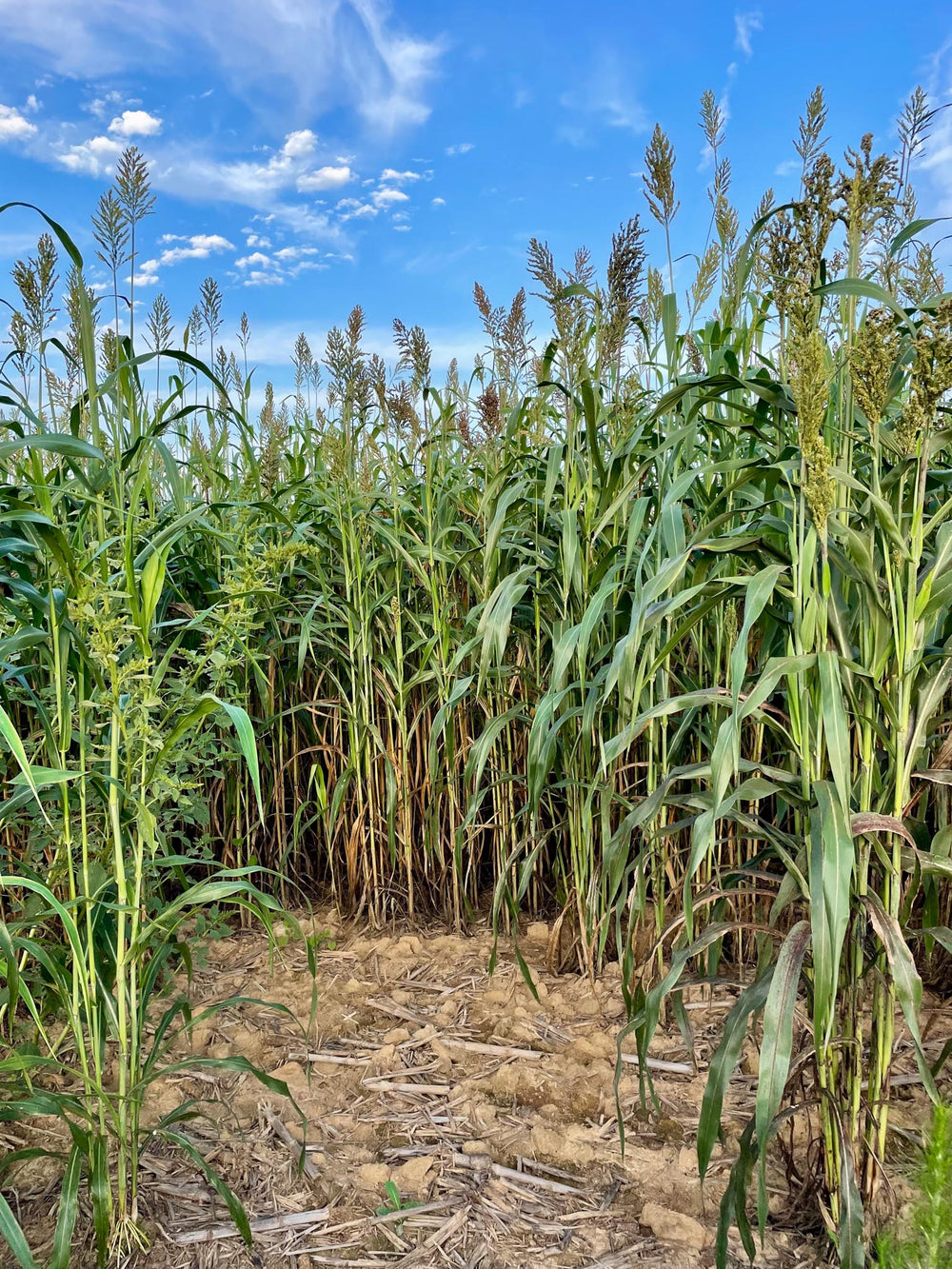
Small kill plots like this one, tucked close to cover, give deer a comfortable place to feed during daylight.
How Much, Based on Where You Hunt
5 to 10% of your total acreage is a good range to start from, but where you land inside it depends almost entirely on what's growing around you.
Heavy row-crop country: 2 to 5%.
You aren't going to out-feed a section of soybeans, and there's no sense trying. Your deer are already fed most of the year. What they don't have is anything green once the beans are cut and the corn comes out, so plant less acreage and pick blends that peak late. That's exactly what Late Draw and Late Season Brassicas are built for, and either one will still be pulling deer in December when the fields around you are bare dirt. In this country your plots earn their keep on timing rather than tonnage, and a bigger share of your acreage can go into small hunting plots.

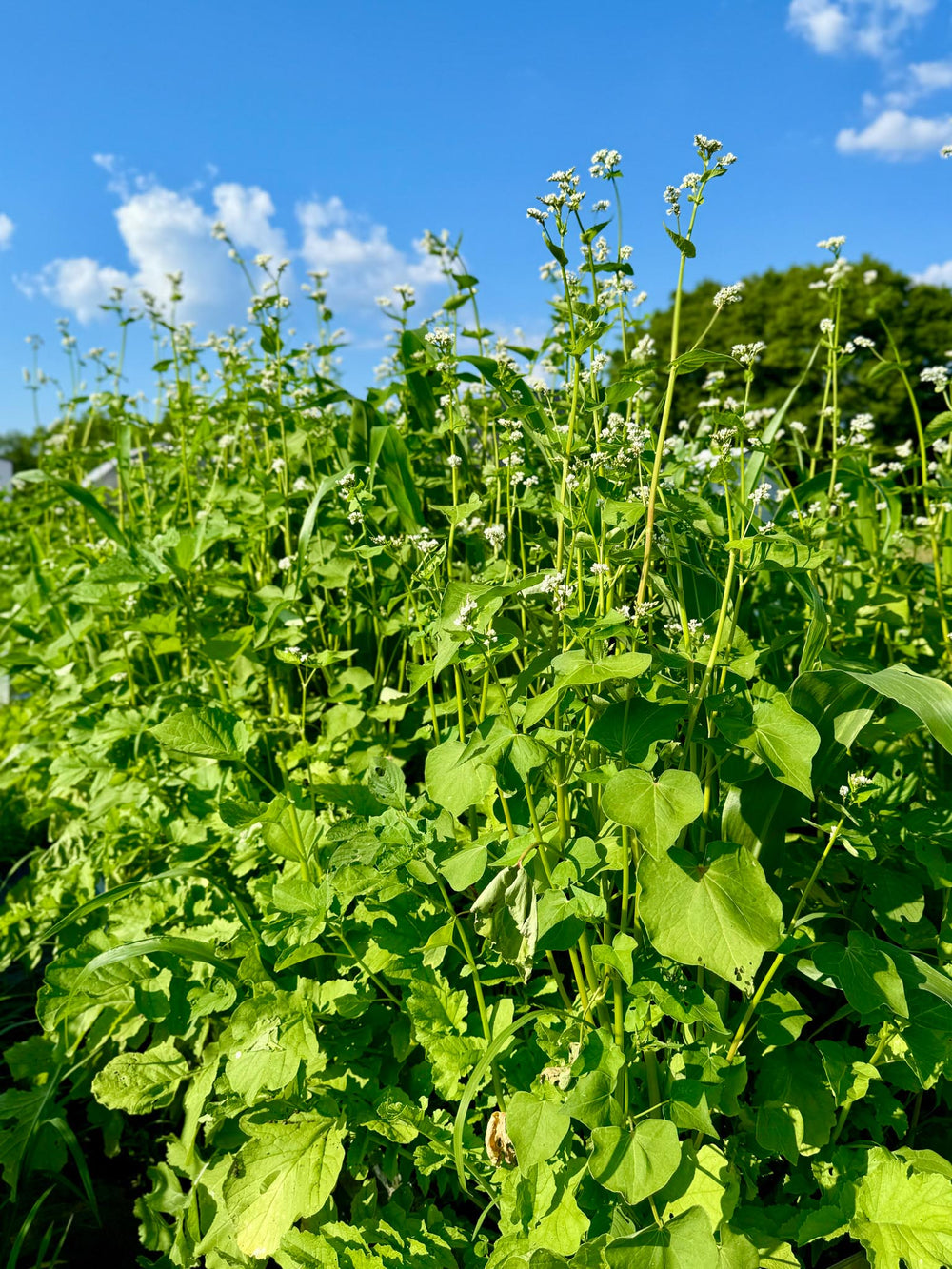
Food plots alongside a large ag field provide dependable forage after surrounding crops are harvested.
Mixed ground with some ag and some timber: 5 to 8%.
This covers most properties. You've got enough competition that you don't need to feed the whole herd yourself, but not so much that your plots get ignored. An even split works here, one or two destination plots carrying the feeding load with several small plots worked in around them.
Big timber with no farms for miles: 8 to 10%, sometimes more.
Out here your plots are the only real groceries in the neighborhood, and deer will come from a long way off to use them. It's genuinely hard to plant too much. This is where destination acreage pays for itself, because that food is doing real work for your herd and not just competing with a neighbor's field.
On 100 acres of mixed ground, 5 to 8% works out to 5 to 8 acres. That might be one 4-acre field plus four half-acre plots scattered where you like to hunt, or two smaller destination plots instead of one big one. Same 100 acres in unbroken timber and you could justify 8 or 10 acres, and you'd want more of it in bigger fields.
Don't Trade Away Your Cover to Get There
Every acre you clear for food came out of something else, and on smaller properties that something is usually cover. Deer need somewhere to spend the day, and a place with plenty of food and nowhere to bed will feed your neighbor's deer at night and hold very few of its own.
If you're working with 40 acres and hitting even the low end of your range means clearing your only thicket, don't. Come in under it. You'll kill more deer over 2 acres with good cover around them than 4 acres in the open.
Measure It Before You Clear It
Nobody's good at eyeballing acreage, and most of us think we are. A plot a guy has always called an acre turns out to be closer to two, and he finds out the hard way when he shows up with half the seed he needed and ends up with a thin plot he has to overseed later.
Draw your openings on the map in the Whitetail Hill app, or walk the edges with your phone, and you'll know what you actually have to work with. It'll tell you what each plot needs for seed, lime, and fertilizer once it knows the size.
While you're in there, add up the openings you already have. Old logging roads, landings, field corners. A lot of guys are closer to their number than they think and just never totaled it up. Those out-of-the-way spots also make some of the best kill plots on a property.
The Bottom Line
Start in the 5 to 10% range, then adjust for your ground. 2 to 5% in farm country, 5 to 8% on mixed ground, 8 to 10% or better in big timber. Put most of it in destination plots that feed your deer and work small kill plots in around them where you hunt.
Then quit worrying about the percentage and go make the plots you already have better. Take a soil test and make the amendments needed to improve your plots. A well-limed, well-fertilized 2 acres will out-produce a neglected 4 every single year.
Frequently Asked Questions
How much of my property should be in food plots?
5 to 10% is a good starting range, adjusted for what's around you. Figure 2 to 5% if you're surrounded by row crops, 5 to 8% on mixed ground with some ag and some timber, and 8 to 10% or more in big timber where your plots are the only real food available.
How many acres of food plots do I need for 100 acres?
5 to 8 acres on typical mixed ground, usually one or two larger fields plus three or four small hunting plots. In farm country, 2 to 5 acres placed well is plenty. In unbroken timber you could justify 8 or 10.
How should I split my acreage between feeding plots and hunting plots?
Put most of it in larger destination plots that feed your herd, and work several quarter- to half-acre kill plots in around them where you hunt. The heavier the agriculture around you, the more of your acreage can shift toward small hunting plots, since feeding the herd isn't the priority.
How big should my food plots be?
Destination plots generally run a couple of acres and up. Kill plots work best at a quarter to a half acre, small enough that any deer on the plot is in range and hidden enough that a mature buck will use it in daylight. Small plots take heavy browsing, so they need graze-tolerant seed like Kill Plot to make it through the season.
Is one acre of food plots enough for my property?
For hunting, absolutely. A well-placed acre, or even a quarter acre back in cover, can be the best spot on your property.
Can I have too many food plots?
You can. Every acre of food came out of cover, and a property short on bedding cover holds fewer deer no matter how much you plant. On small tracts especially, some of that ground is better left thick.
Do I still need food plots if I'm surrounded by farmland?
Yes, just less of it and for a different reason. In farm country your plots aren't feeding the herd, they're being the last green thing standing once the crops are gone. 2 to 5%, planted in blends that peak late like Late Draw or Late Season Brassicas, will do more than twice that much planted to compete with standing beans.
Should I plant food plots or work on my timber first?
If your woods are closed up with nothing growing underneath, timber work usually does more per dollar than another plot. Opening the canopy and putting fire on the ground improves food and cover across the whole property instead of just the acres you plant. Food plots work best on top of good habitat rather than in place of it.